
 Awakening The Mind – When Thoughts Drive Reality
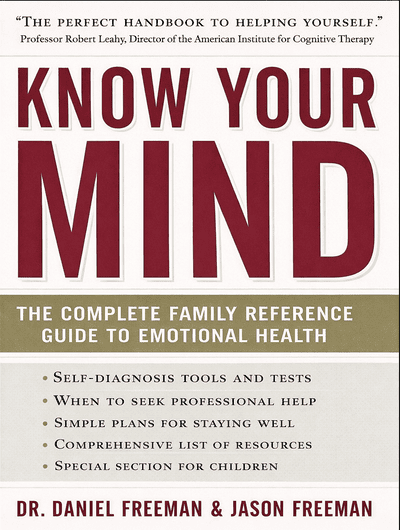
What if what we trust most is also the greatest trap? This question immediately cuts to the core and opens the reflection developed by Know Your Mind by Daniel Freeman. At the very beginning, it becomes clear that the mind is not a passive observer of the world, but an active creator of meaning. Every day it interprets stimuli, builds explanations and concludes stories, before we even realize what is happening. It is in this process that power – and danger – lies. The reality we experience is not a direct reflection of the external world, but the result of internal processing. When we do not understand this, we become prisoners of our own mental constructions.
The Mechanics Of Fear And Why The Mind Exaggerates
The mind is evolutionarily geared to perceive threats. Its task is not happiness, but survival. Because of this, it often overreacts, looking for danger even where there is none, and keeping us on constant alert. It explains in detail how bodily sensations, such as tension, rapid heartbeat, or restlessness, are connected to the explanations offered by the mind. These explanations then trigger even more fear. This creates a vicious cycle in which thoughts reinforce emotions, emotions confirm thoughts, and it becomes increasingly difficult for the individual to distinguish between fact and assumption. It is particularly emphasized that such processes are not a sign of weakness, but purely human responses.
How Beliefs Are Formed And Why They Are So Persistent
Beliefs do not arise overnight. They are built slowly, through repeated thoughts, experiences, and explanations. Once they are consolidated, they begin to act as a filter through which we perceive the world. Every new event is interpreted in such a way as to confirm an already existing story. If we believe that the world is dangerous, we will find danger everywhere. If we believe that we are weak, we will experience every mistake as proof. This part reveals how even very extreme beliefs can develop and why they are often not shaken by rational arguments alone. The mind does not seek truth, but a sense of certainty.
Breaking The Vicious Circle – Attitude Towards Thoughts
One of the most important breakthroughs occurs when an individual stops treating thoughts as commands. The key realization is that thoughts are not dangerous in themselves, what is dangerous is their unconditional adherence. Concrete ways of creating distance are described: observing thoughts, allowing uncertainty and gradually confronting fear. Courage here does not mean the absence of fear, but the willingness to act despite it. This changes the dynamic – the mind loses its monopoly on behavior, and the individual begins to choose how to live again.
Life Beyond Control And A New Definition Of Freedom
The conclusion brings a strong and realistic message: complete control over the mind is neither possible nor necessary. Freedom is born from accepting inner chaos and trusting that we can endure it. When we stop constantly checking, analyzing, and guarding ourselves against every unpleasant thought, space opens up for life. The mind becomes an ally, not a tyrant. Uncertainty is no longer the enemy, but a natural part of existence. It is in this understanding that the possibility of lasting change lies – not as a quick fix, but as a profound inner transformation that restores a sense of power and meaning to the individual.
SUBSCRIBE to the YouTube channel for more KNOWLEDGE from books.
